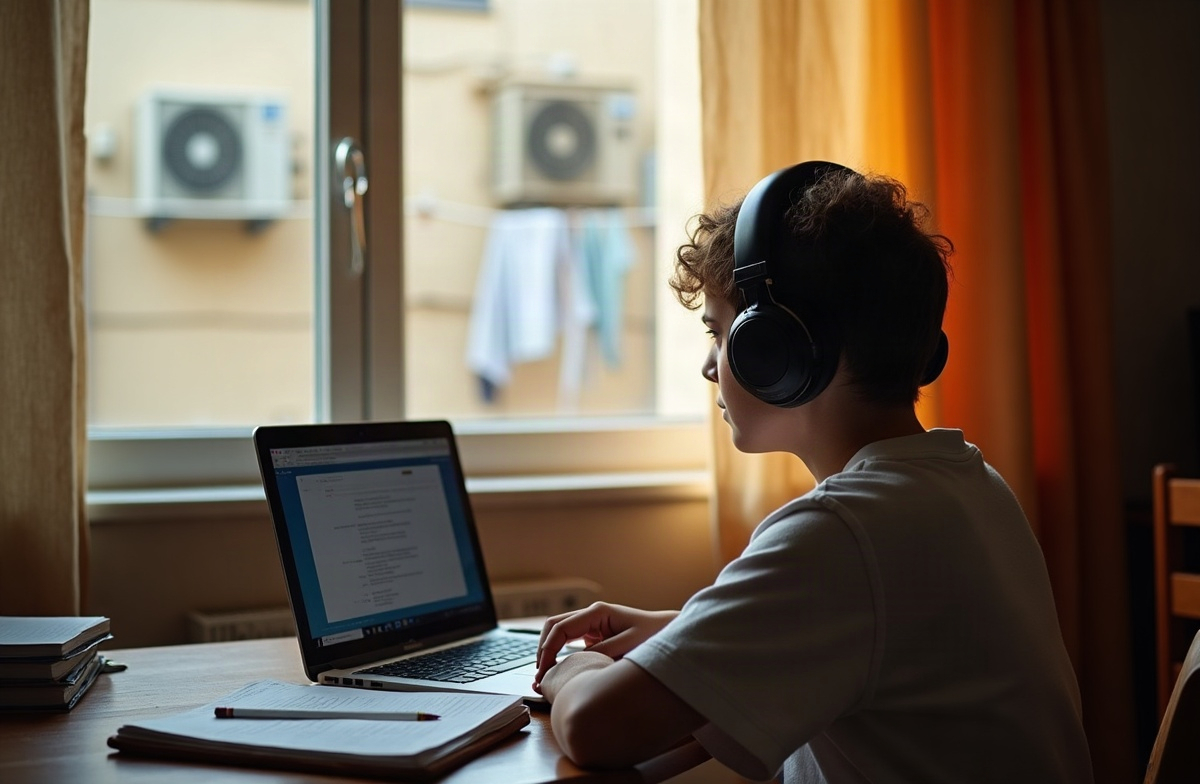
Distance Learning in Israel: Lessons from Corona and War
In recent years, distance learning in Israel has ceased to be a temporary measure and has become a stable part of the education system. The coronavirus pandemic forced schools, universities, and private tutors to urgently master online formats, and subsequent events related to war and periods of instability cemented this experience and demonstrated its practical value. For Russian-speaking families in Israel, the topic is especially relevant: parents need to understand how to organize their child’s schooling, where to find tutors, and how to quickly find the necessary services. A free classifieds board helps here: every ad on the website 4israel.co.il is automatically translated into English, Russian, Arabic, and Hebrew, so the information you post about tutoring or seeking a teacher immediately becomes available to the widest audience in the country.
How the pandemic changed Israeli education
In spring 2020, Israeli schools and universities were forced to switch to remote learning almost instantly. The first months revealed both strengths and weaknesses of this approach. On the one hand, students gained access to materials from home, and teachers mastered video conferencing and digital platforms. On the other hand, inequality became obvious: not every family had suitable computers, stable internet, and a separate workspace for the child. Many parents faced for the first time the need to combine work with monitoring home lessons.
Gradually, the Israeli education system developed more mature solutions: unified requirements for online lessons appeared, schools began issuing equipment to those in need, and teachers received additional training. It was the pandemic that showed that distance format can be not only a forced measure but also a full-fledged tool. For Russian-speaking families, this experience proved especially useful: remote lessons with a Russian-speaking teacher maintained a connection to the familiar educational tradition and helped children adapt more smoothly to the Israeli curriculum.
Wartime experience: flexibility and continuity of learning
Periods of heightened security situations posed new challenges for the education system. When the usual routine is disrupted and in-person classes in certain areas are suspended, it is distance formats that allow continuity of learning. Schools and universities promptly switch to online mode, and students continue with the familiar curriculum. This experience taught Israeli teachers to adapt quickly and maintain contact with students even in difficult conditions.
At the same time, demand for private online services has grown: tutors help catch up on missed material, prepare for exams, and improve Hebrew or English. Parents are looking for specialists who work remotely and are ready to teach on a flexible schedule. In this situation, it is convenient to post an ad on the services board or find the right tutor among already published offers — and automatic translation into four languages removes the language barrier between client and provider.
Technologies and methods that have taken hold
Over several years, Israeli educational institutions have accumulated a practical set of tools that have proven effective. Video conferencing with the ability to record lessons allows students to revisit difficult topics. Electronic diaries and assignment platforms simplify progress tracking. Interactive whiteboards and shared documents make online lessons lively and engaging. For younger students, short lessons with frequent changes of activity are important; for high school students, clear structure and feedback from the teacher are key.
Exam preparation deserves special attention. Distance courses and private lessons make it possible to study with strong teachers regardless of the city of residence — from Beersheba, Haifa, Tel Aviv, or a small town. Parents who need additional materials or study equipment should check the second-hand section: there you can find textbooks, computers, and other equipment at affordable prices, and an ad in a clear language speeds up agreement with the seller.
Practical tips for parents and teachers
For distance learning to be effective, it is important to organize space and routine. Set aside a permanent workspace for the child with good lighting, ensure stable internet, and agree on rules for using gadgets. Create a weekly schedule and leave time for rest and walks. Maintain contact with the homeroom teacher and instructors: in the online format, parents’ initiative is especially noticeable and useful.
Teachers should prepare materials in advance, record key explanations, and give students clear instructions. For private specialists, a well-written ad helps: indicate the subject, lesson format, experience, and price. Post it in the services section, and thanks to automatic translation, your offer will be seen by families speaking Russian, Hebrew, Arabic, and English. Those who are moving or looking for housing near a good school will find real estate ads useful, and specialists combining work with study will benefit from job openings in the jobs section.
What lies ahead for distance learning
The experience of corona and war has shown that the future of Israeli education lies in a combination of in-person and online formats. Hybrid models allow maintaining the quality of education under any circumstances, and the digital skills acquired by students and teachers remain with them for a long time. For the Russian-speaking community, this means more opportunities: to study with a teacher from any city, to find educational materials and services in a clear language, and to quickly negotiate cooperation. The free classifieds board makes this process simple and accessible: just publish an ad, and it instantly becomes understandable to native speakers of English, Russian, Arabic, and Hebrew. Use this tool to find the right people, offer your services, and solve everyday tasks faster and more conveniently.