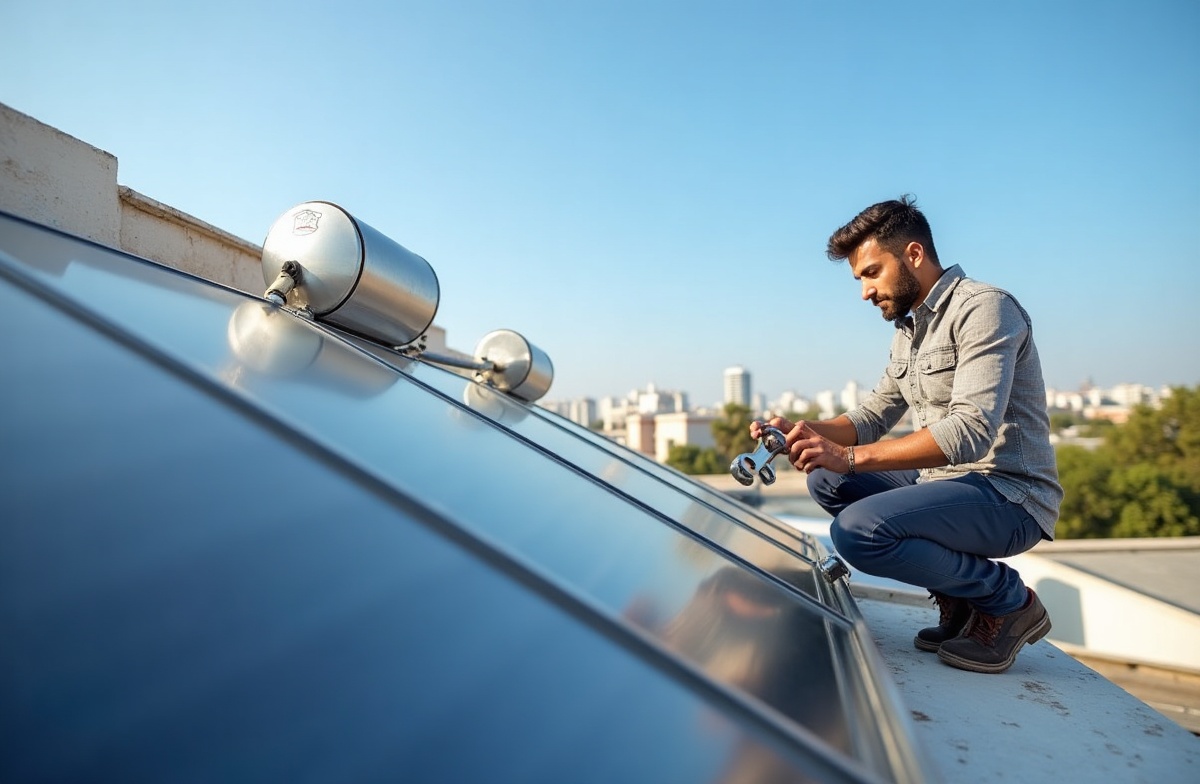
Solar Water Heaters (dud shemesh): Maintenance, Repair and Savings
In Israel, a solar water heater is not just a common device on every rooftop, but a vital part of the infrastructure. Thanks to the abundance of sunny days, this system allows saving up to 80% on water heating costs, which is especially noticeable with current electricity prices. However, like any equipment, the dud shemesh requires regular maintenance and timely repairs. Neglecting simple operating rules leads to leaks, reduced efficiency, and costly tank replacement. In this article, we will cover the basic operating principles, ways to extend its lifespan, common malfunctions, and savings methods. And if you need spare parts or technician services, remember: on our classifieds board, you can post a request or find a service provider. Moreover, each ad is automatically translated into Russian, Hebrew, English, and Arabic, making the search as convenient as possible for all residents of the country.
How a solar water heater works and why it breaks down
A classic system consists of a flat or vacuum collector installed on the roof and a storage tank, which is usually positioned vertically next to the collector or built into it. The operating principle is simple: the heat transfer fluid (water or antifreeze) is heated in the collector by sunlight and, through natural circulation, transfers heat to the tank. Inside the tank, there is an electric heating element that only turns on during cloudy days or in winter when solar energy is insufficient.
The main causes of breakdowns are metal corrosion, scale buildup on the heating element, wear of gaskets, and clogged pipes. Israeli water, with its high salt and mineral content, is the main enemy of any water heater. Even a high-quality enameled tank will eventually deteriorate if the magnesium anode, which absorbs the impact, is not replaced. Another common issue is thermostat or relay failure, causing the water to overheat or, conversely, not heat at all.
It is important to understand that regular maintenance, performed every two to three years, nearly doubles the lifespan of the water heater. Do not wait until rusty water flows from the tank or stains appear on the roof. Prevention is always cheaper than major repairs.
How to protect the tank from corrosion and scale: maintenance tips
The main enemy of the tank is corrosion. To protect the inner surface, manufacturers install a magnesium anode—a sacrificial rod that dissolves instead of the steel. Over time, it completely deteriorates, and if not replaced, the tank itself begins to degrade. The anode should be checked at least once a year, especially if you have an older heater or hard water. Replacing the anode is an inexpensive procedure that costs several times less than buying a new tank.
The second serious issue is scale buildup on the heating element. A thick layer of salts impairs heat transfer, increases heating time, and causes the element to overheat. As a result, the heating element burns out, and the heater loses efficiency. Descaling the heating element is a mandatory procedure that can be done independently if you have experience, or entrusted to a professional. For prevention, it is recommended to use special cleaning agents for the inner chamber every two years or hire a technician for a full system flush.
Do not forget about the external condition of the collector. Dust, dirt, and bird droppings reduce the transparency of the glass, decreasing the amount of absorbed solar heat. Regularly (at least once a season) clean the collector surface with a soft cloth and a soapy solution. Also ensure that the pipes connecting the collector to the tank have no leaks and retain their insulation. Check the condition of sealing rings and rubber gaskets—replace them at the first signs of wear.
Common malfunctions and DIY repair options
Some faults can be fixed on your own without calling a technician. If the heater is not heating water, start by checking the electrical components: the socket, the circuit breaker in the panel, and the switch on the unit. If power is fine, check the thermostat—it may have tripped. To reset it, simply press the button on the thermostat. Also inspect the heating element for a broken circuit using a multimeter.
Water leaking from the pressure relief valve is a common occurrence caused by excessive pressure in the tank. If the valve constantly drips, first try flushing it by lifting the lever to release pressure. If that doesn’t help, the valve is likely clogged or the spring is worn—replace it with a new one. It is important to remember that when heated, the pressure in the system is always elevated, so a slight drip during heating is normal, but a continuous flow requires intervention.
Tank corrosion is the most complex malfunction. If rusty water comes from the hot water pipe or moisture appears on the tank’s seams, it can no longer be saved. In such a case, a complete removal and installation of a new tank is necessary. Do not attempt to weld the leak—this is only a temporary measure that will not solve the problem. When purchasing new equipment, look for models with reinforced enamel coating and a long warranty period; they will last longer.
Savings through proper operation and cost-effective solutions
The main benefit of a solar water heater is the reduction in monthly electricity bills. With Israel’s average solar conditions (about 300 sunny days a year), you can heat water for free for most of the year. However, if the system operates inefficiently, you are overpaying. Monitor the activation time of the heating element: it is optimal to set it for nighttime hours when the electricity tariff is lower (with a two-tariff meter). Also, do not turn on the heating element if it was sunny during the day—the tank is already heated.
Another factor in savings is proper insulation of the tank and pipes. Over time, the insulation wears out, increasing heat loss by 10–15%. You can improve insulation by wrapping the tank with special foil material and insulating the pipes leading into the house. This is inexpensive and pays for itself within a season. Also, do not forget to drain hot water from the tank if you are away for a long time—this prevents stagnation and corrosion.
If your system has served for more than 12–15 years, consider upgrading. Modern models with vacuum tubes have an efficiency 20% higher than older flat collectors, providing faster heating even in winter. In the long run, replacing old equipment pays for itself in 3–4 years thanks to significant electricity savings. When purchasing new components or looking for an installation technician, it is convenient to use classifieds boards where you can compare prices and choose a reliable specialist.
Looking for a quality replacement tank, parts, or a technician with good reviews? We recommend checking the services section on our platform. It is also useful to browse the second-hand section, where new spare parts are often sold at warehouse prices without markups. And if you provide water heater repair services yourself, post an ad in the services section—thanks to automatic translation, clients speaking any language will find you.
Conclusion: caring for your heater is caring for your budget
A solar water heater is a reliable and economical helper in every Israeli home, but only with proper care. Regular checks of the anode, descaling the heating element, timely replacement of gaskets, and pressure control will help avoid sudden breakdowns and extend the equipment’s lifespan for many years. Replacing small parts costs hundreds of shekels, while installing a new tank costs thousands. Remember prevention: one inspection a year will save you significant money.
We have covered the main aspects of operation, common faults, and ways to reduce expenses. By applying this knowledge, you will not only save on electricity bills but also ensure comfort for your family. If you need professional services or are looking for affordable components, visit our website. Post a free ad about your need or offer, and thanks to instant automatic translation into Russian, Hebrew, English, and Arabic, you can reach the widest possible audience. It is fast, convenient, and completely free—take advantage of the multilingual platform today!