Wedding Traditions in Israel: From the Chuppah to the Feast
A wedding in Israel is a unique blend of ancient customs, religious prescriptions, and modern trends. In a country where people of diverse cultures and faiths live, understanding local wedding traditions becomes key to successfully organizing the celebration. This article will help future newlyweds and their guests navigate the variety of rituals, from preparation for the ceremony to the festivities at the banquet. This information is especially relevant for those seeking wedding professionals’ services, renting a venue, or selling gifts. Thanks to free classifieds boards like 4israel.co.il, where every ad is automatically translated into Hebrew, English, Russian, and Arabic, you can easily find everything you need for a wedding, overcoming language barriers and reaching the widest audience in the country.
Preparation for the Celebration: From Choosing the Date to the Ketubah
Preparation for an Israeli wedding begins long before the actual day. An important stage is choosing the date, which is often coordinated with the Jewish calendar (for example, periods of mourning are avoided). One of the key documents is the ketubah — a marriage contract outlining the husband’s obligations to his wife. Its text is written in Aramaic and often becomes a true work of art. At this stage, many turn to professionals: from ketubah scribes to event organizers, whose services can be found in the Services section. Dresses, suits, and jewelry are also actively sought, making browsing ads in the Hand-to-Hand category relevant.
The Ceremony Under the Chuppah: Symbolism and Stages
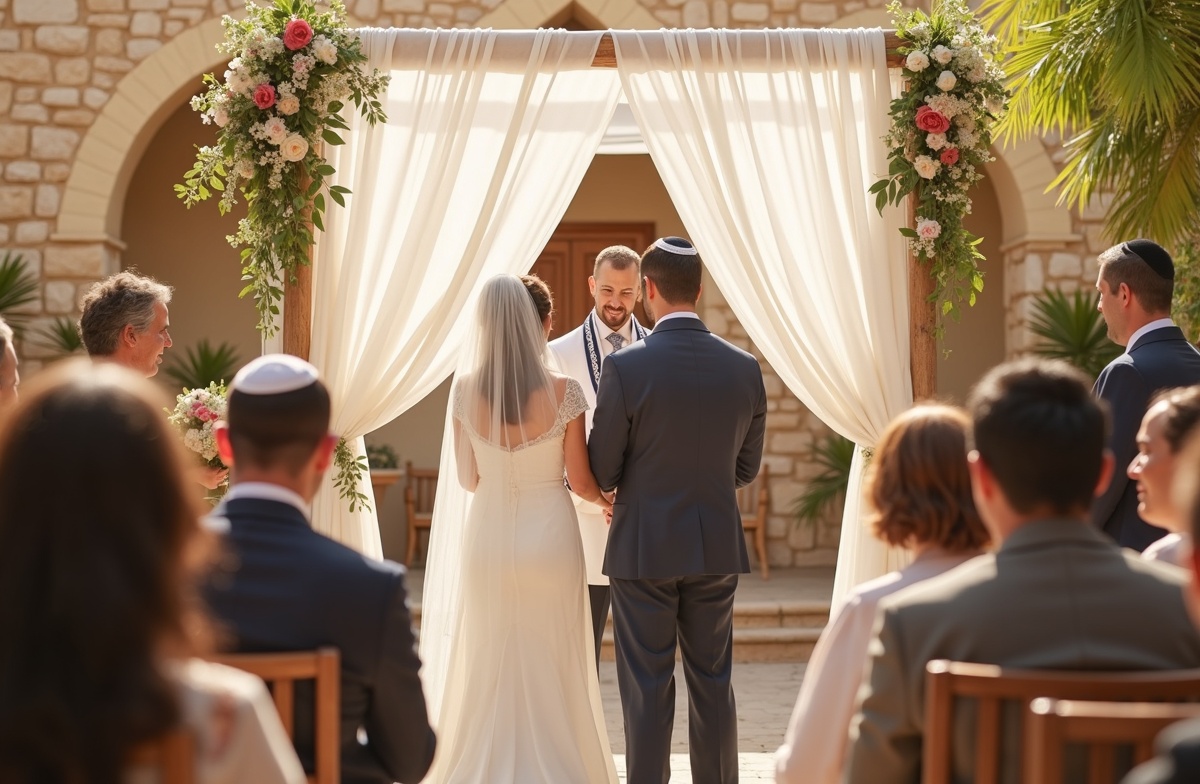
The heart of a traditional Jewish wedding is the ceremony under the chuppah (canopy). The chuppah, often a canopy on four poles, symbolizes the future family home. The ceremony consists of several sequential parts. First, the groom, in the presence of witnesses, performs Kiddush (sanctification) over a cup of wine and places the ring on the bride’s finger, reciting the established formula. Then the ketubah is read. The climax is the recitation of the Seven Blessings (Sheva Brachot). The ritual concludes with the breaking of a glass in memory of the destruction of the Temple, after which lively celebration begins.
The Wedding Feast: Music, Dancing, and Treats
After the official ceremony, guests are invited to the festive meal. The Israeli wedding feast is famous for its scale, energetic music, and general merriment. An essential element is the “ima hatuna” — a special wedding meal, often including many salads, meat dishes, and desserts. The center of attention becomes the dancing: from traditional circle dances to modern performances. Organizing such a banquet requires a lot: renting a hall (offers can be searched for in Real Estate, filtering for commercial premises), hiring musicians, catering, and photographers. All these professionals actively post their offers on online platforms.
The Many Faces of Israeli Weddings: Secular and Intercultural Marriages
Not all weddings in Israel follow a strictly religious script. Many couples, especially immigrants from various countries, choose secular or alternative ceremonies that combine elements of different cultures. This could be a civil wedding abroad or a symbolic ceremony by the sea. In such cases, flexibility in searching for services and goods is especially important. A platform where an ad for selling a wedding dress or searching for an MC instantly becomes available in four languages is indispensable. It allows you to both sell items no longer needed after the wedding (for example, via Hand-to-Hand) and find unique offers for your special day.
After the Wedding: Logistics and New Beginnings
When the wedding music fades, the newlyweds face practical tasks of setting up their life together. This is often related to moving, searching for a new apartment, or buying a family car. Online ads also help with these matters. For example, you can start your housing search in the Real Estate section, and find a family car in the Auto category. The automatic translation of ads guarantees that you won’t miss anything and can negotiate with a seller or landlord, regardless of the language they originally posted the information in.
A wedding in Israel is a vibrant and multi-layered event requiring careful preparation and understanding of local customs. From the sacred rituals under the chuppah to the noisy, crowded feast, each stage is filled with deep meaning. Knowing these traditions helps make the celebration truly unforgettable. Modern digital tools are extremely useful for realizing all wedding plans. By posting an ad to sell wedding accessories, search for a photographer, or rent a hall on the 4israel.co.il platform, you gain a unique advantage: your offer automatically becomes understandable to a huge audience in Israel, as it is published immediately in Russian, Hebrew, English, and Arabic. This saves time, expands opportunities, and helps make your special day exactly as you envisioned it.