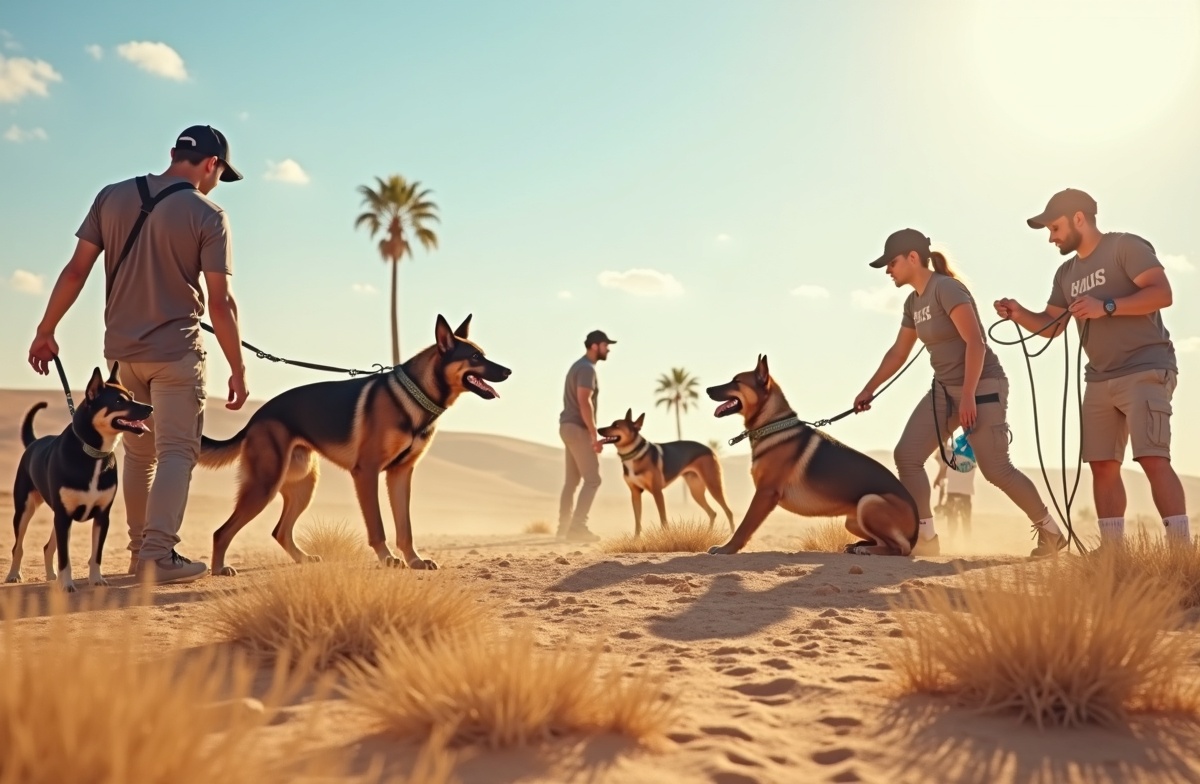
Dog Training: Courses and Independent Training
Reading time: 5 minutes
Key points:
- Basics of upbringing and trust.
- Benefits of professional courses.
- Necessary tools for training.
- Socialization and behavioral problems.
- Finding like-minded people and resources.
Article contents:
- Basics of upbringing: where to start
- Professional courses: when and why
- Necessary tools and equipment
- Socialization and solving behavioral problems
- Finding like-minded people and useful resources
Basics of upbringing: where to start
Raising an obedient and happy dog is an important task for any responsible owner. In Israel, where families often speak different languages, finding a suitable dog trainer or useful information can be challenging. Especially if you are looking for an instructor who will explain everything clearly to you, or want to offer your training services to a wide audience. Fortunately, modern technology helps overcome the language barrier. By posting an ad on a specialized platform, you gain a unique advantage: your text is automatically translated into four key languages — Hebrew, English, Russian, and Arabic. This means that your offer or request will be seen and understood by practically all residents of the country, which significantly increases the chances of success.
Professional courses: when and why
If you are dealing with problematic behavior (aggression, severe fear, uncontrollability) or want to achieve high results in sport training, you cannot do without professional help. Group obedience courses (OKD) are excellent for socializing your dog and practicing commands in distracting environments. Individual sessions with a dog trainer allow for developing a personalized program considering all the characteristics of your pet. When choosing a specialist, pay attention to their working methods (modern training is based on positive reinforcement) and experience. You can find a verified instructor in your city through the Services section, where masters of their craft offer help in all the main languages of the country.
Necessary tools and equipment
For effective training, you will need minimal but proper equipment. This includes a convenient retractable leash or a short leash, a soft collar or harness, and treats for rewards. A special mat will be useful for practicing patience and the “place” command. At more advanced stages, a clicker for marking correct behavior, barriers, and tunnels for agility might come in handy. Many of these accessories can be purchased second-hand at a good price, as dogs grow quickly and different equipment is needed. Check out the Second-hand section — quality pet items are often sold there at pleasant prices.
Socialization and solving behavioral problems
Training is not just about commands, but also about raising a well-balanced dog that feels comfortable in society. Socialization, i.e., gradual exposure to city noise, other animals, people, and new places, is critically important. Many problems — barking at passersby, fear of transport, aggression towards other dogs — arise due to its lack. Correcting such behavior requires understanding the causes and, often, the help of an animal psychologist or an experienced dog trainer. Do not hesitate to seek a specialist, as a timely solved problem will save nerves for both you and your pet.
Finding like-minded people and useful resources
Raising a dog is a journey best taken in the company of like-minded people. Look for local dog clubs, social media groups for owners of your dog’s breed, or dog-friendly events in your city. Exchanging experiences, joint outings into nature, and moral support are invaluable. Furthermore, if you are moving or looking for new housing where both you and your large pet will be comfortable, pay attention to listings in the Real Estate section, where you can find suitable options.
Dog training is an investment in your long and happy years together. Whether you choose independent learning, professional courses, or a combination of both, the key to success lies in understanding, patience, and regularity. Use all available resources, from buying second-hand equipment to finding the best instructor. And remember, by posting any ad related to the world of pets — whether it’s looking for a trainer, selling accessories, or offering your services — on a modern platform, you automatically make it accessible to the entire multilingual audience of Israel. Your message, instantly translated into Hebrew, English, Russian, and Arabic, will resonate with the widest possible range of people, which is an undeniable advantage in our multicultural society.
Frequently Asked Questions
1. How to choose a suitable dog trainer?
It is important to pay attention to the specialist’s working methods and their experience. Modern training should be based on positive reinforcement.
2. How long does training take?
Training, as a rule, requires time and patience. Regular sessions of 5-10 minutes will be more effective than rare, lengthy training sessions.
3. Is it worth taking courses?
If your dog has behavioral problems or you want to achieve high results, professional courses can be an excellent solution.