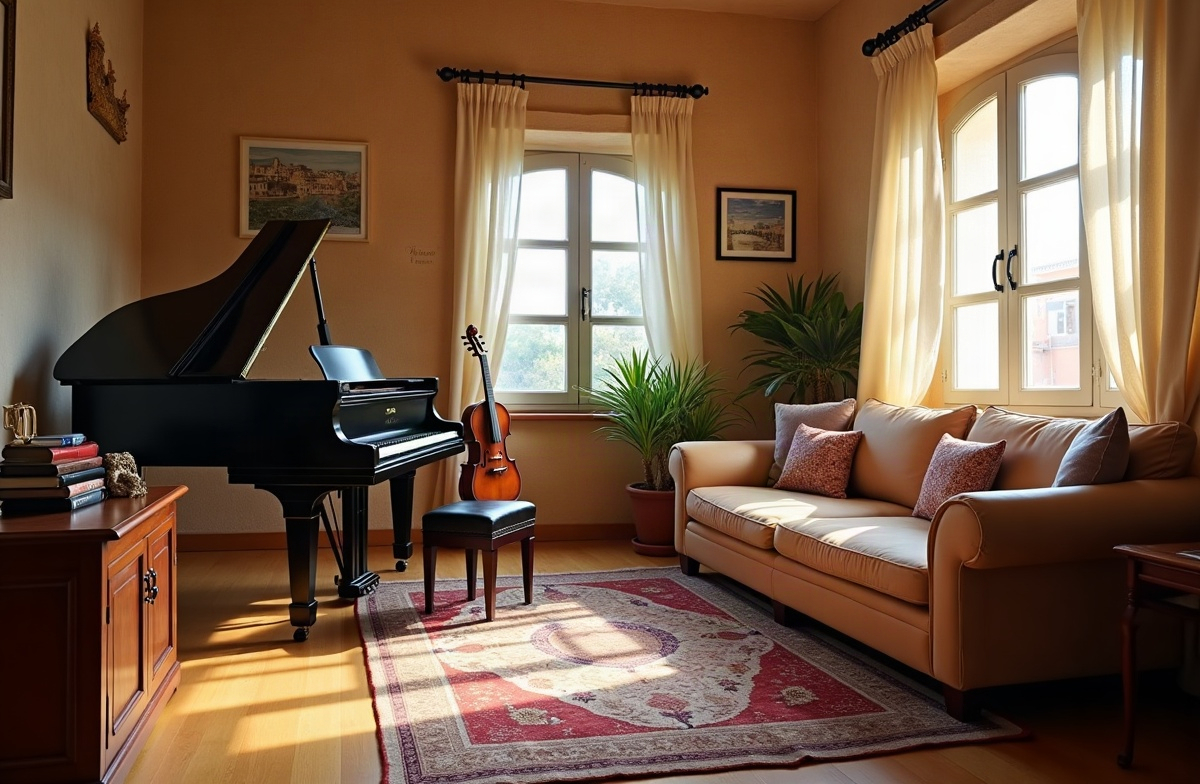
Music Education in Israel: Conservatories and Private Lessons
Music education in Israel is a blend of academic rigor, rich cultural traditions, and accessibility for people of all ages. For new immigrants and their children, the question of music education often becomes one of the first steps toward integration into a new cultural environment and, at the same time, a way to maintain a connection to their own roots. Israel offers a wide range of formats: from prestigious conservatories to flexible private lessons with a teacher who comes to your home. That is precisely why listings for music services are in such high demand on the platform 4israel.co.il. The main advantage of the site is the automatic translation of every listing into the four most common languages in the country: English, Russian, Arabic, and Hebrew. The author publishes the text once, and their offer instantly becomes understandable to tens of thousands of potential students, regardless of their native language.
Why Music Education Is Valued in Israel
Israel’s cultural environment is remarkably vibrant: symphony orchestras in Tel Aviv, Jerusalem, and Haifa, an active jazz scene, festival life, and considerable attention to music education in schools. Parents here traditionally view music lessons not as a whim but as an investment in their child’s development: music is associated with improved concentration, memory, and discipline.
For adults, learning music often becomes a way to relieve stress, find a social circle, or change careers. It is also important that in Israel people who can play traditional instruments are valued—there is demand for teachers of clarinet, violin, oud, bouzouki, and piano. That is why the music teaching market here is diverse and constantly renewing. The most convenient way to find a teacher or offer your own services is on a specialized classifieds board: simply select the “Services” category and post a detailed description indicating the instrument, experience, and format of lessons.
Conservatories and Academic Programs
Professional music education in Israel is concentrated in several major institutions. The leading role is played by the Rubin Academy of Music and Dance in Jerusalem, as well as the music departments of universities in Tel Aviv and Haifa. These institutions train performers, composers, musicologists, and teachers, admitting students after a rigorous audition.
For children, there is a system of municipal music schools and conservatories at cultural centers: they offer group and individual lessons at affordable prices, participation in orchestras and ensembles. Admission is usually based on an interview and an assessment of musical ear, and application deadlines should be clarified in advance—the academic year begins in the fall.
However, the academic path is not for everyone: it requires serious preparation, time, and a willingness to follow a strict curriculum. Many students and parents choose it gradually—first trying private lessons to understand whether the child is truly ready for systematic study.
Private Lessons: Flexibility and an Individual Approach
Private lessons are the most popular format for music education in Israel for people of any age and level. Their main advantages: a flexible schedule, the option to study at home or online, repertoire selected to match the student’s interests, and attention to specific goals. Some are preparing for conservatory admission, others need to learn chords for amateur playing around a campfire, and still others simply want to learn to read sheet music.
When choosing a teacher, pay attention to several practical points:
Experience and education. Ask whether the teacher has formal music education and experience working with students of your age.
Language of communication. Lessons can be conducted in Hebrew, Russian, English, or Arabic—this is especially important for children who find it easier to absorb material in their native language.
Format and cost. Find out whether online lessons are available, what the price of one lesson is, and whether a trial lesson is offered. Instrument rental is a separate expense, and not every teacher helps with arranging it.
Reviews. Genuine recommendations from students and parents are often worth more than any advertising promises.
If you yourself teach music, you can post a listing in the “Second Hand” section or in the services category—this will allow you to reach an audience that is looking for specialists across various fields in one place.
How to Find the Right Teacher or Student
The classifieds platform in Israel is convenient because it brings together students, parents, and teachers in a shared space. To make sure your listing gets noticed, follow a few simple rules.
Be specific in the headline. Instead of “Music Lessons,” write something like: “Piano lessons for children, in-home lessons in Ramat Gan.” Such a headline immediately answers the main questions.
Describe your methodology and the result. Explain what the student will learn in the first months, how lessons are conducted, and what equipment is required.
Keep linguistic diversity in mind. Automatic translation of your text into English, Russian, Arabic, and Hebrew means that native speakers of a wide variety of languages will understand you. This is especially valuable in cities with mixed populations, where immigrant families, local residents, and Arabic-speaking students are looking for teachers at the same time.
And if your interest relates to other areas of life in Israel—from finding a car to renting an apartment—the platform has corresponding sections, including “Auto” and “Real Estate”.
Conclusion
Music education in Israel offers two main paths: the academic one—through conservatories and music schools—and the individual one, through private lessons, which provide flexibility, a personalized approach, and freedom to choose repertoire. The first suits those aiming for a professional career; the second suits students of any age who wish to study at a comfortable pace. For teachers and students, the classifieds platform becomes a meeting point: here you can quickly find a specialist, rent an instrument, or offer your services to a wide audience.
When posting a listing, remember the key advantage of the site: every text is automatically translated into the four most popular languages in the country, so your offer becomes accessible to native speakers of English, Russian, Arabic, and Hebrew without any additional effort. This saves time and significantly expands the circle of potential students and partners. Start with the “Services” section—and music will find its performer, and the performer will find their student.