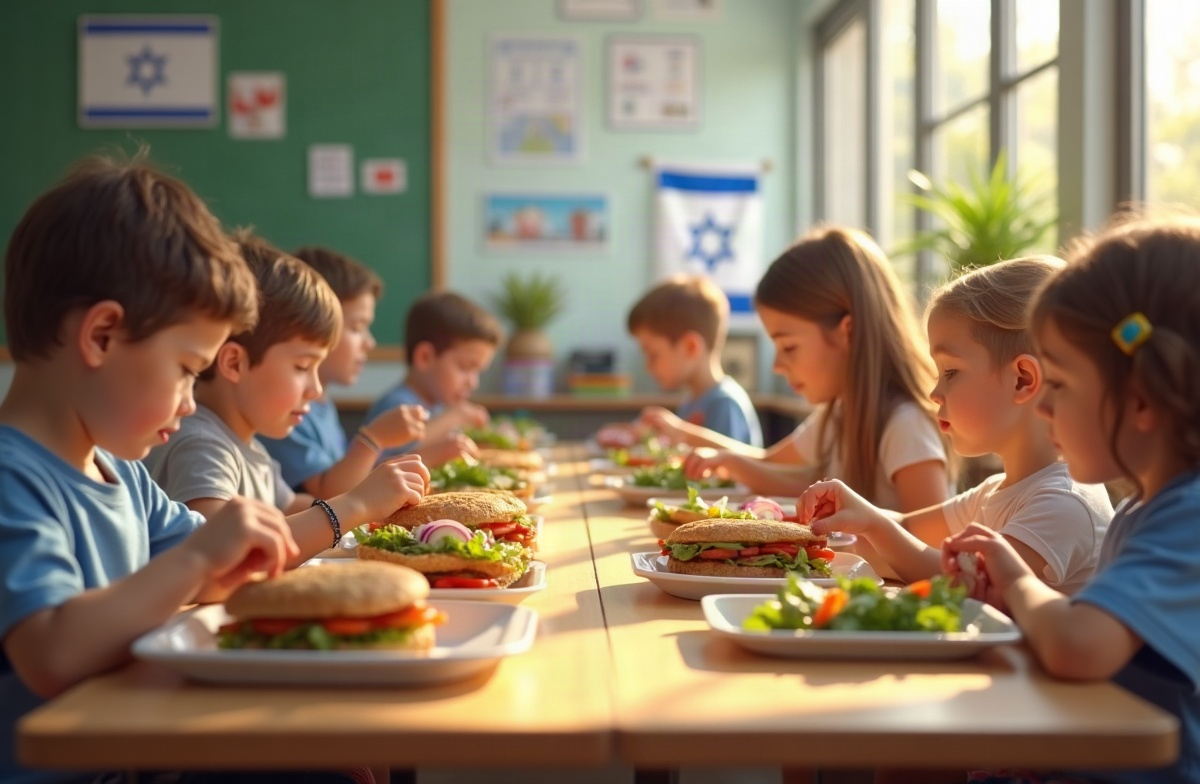
School Meals in Israel: What Kids Get for Lunch and Whether to Add a “Sandwich”
School meals are one of the most discussed topics among parents in Israel. What a child eats during the school day directly affects their attention in class, mood, immunity, and overall well-being. Many families face a dilemma: rely on the school cafeteria or pack lunch from home, adding the usual “sandwich.” In this article, we will take a detailed look at what dishes Israeli schools offer, how meals are organized in different institutions, what standards apply, and how to find a healthy balance between a hot lunch and a home snack. We would also like to highlight the convenience of our classifieds board: every listing is automatically translated into the four most popular languages in Israel — Hebrew, Arabic, English, and Russian. This means that when you post information about nutrition, tutors, services, or goods, you instantly reach an audience across the country.
How School Meals Are Organized in Israel
The school meal system in Israel is not fully centralized: it depends on the municipality, the type of school, and the program in which the institution participates. Most public schools have a buffet or cafeteria where ready-made meals, sandwiches, salads, baked goods, juices, and dairy products are sold. Some schools run a hot lunch program, in which children receive a full set meal. In elementary grades, food is often delivered to the classroom, while in middle and high school students use the buffet on their own.
It is important to understand that the menu is approved taking into account age standards and recommendations from the Ministry of Health. It usually includes protein sources, complex carbohydrates, vegetables, and fruits. In practice, however, the quality and variety of dishes vary greatly. Some schools offer stewed chicken with rice and salad, while others offer pizza, bourekas, and sweet drinks. Parents should familiarize themselves with the menu and rules of the specific school in advance.
If you are looking for a tutor, nanny, or child nutrition specialist, take a look at the Services section — there you can post a listing that will be automatically seen by users in four languages.
What Children Usually Get for Lunch: Examples and Standards
A typical school lunch in an Israeli school may include:
Main dish: chicken, turkey, fish, cutlets, casserole, pasta, rice, potatoes, legumes.
Side dish: vegetable salad, fresh or stewed vegetables, couscous, buckwheat.
Extras: bread, cheese, yogurt, fruit, sometimes soup.
Drink: water, milk, compote, less often — juice.
According to Ministry of Health recommendations, lunch should provide approximately 30–35% of a child’s daily caloric intake. For younger schoolchildren, this is about 500–600 kilocalories; for teenagers, up to 700–800. The menu should include proteins, fiber, vitamins, and minerals, while the amount of sugar, salt, and trans fats should be limited.
In practice, not all schools strictly follow these standards. In some places the menu is varied and balanced, while in others flour-based and sweet dishes dominate. Therefore, it is useful for parents to ask what exactly the child ate and, if necessary, supplement the diet at home.
Is a “Sandwich” Needed: Pros and Cons of a Home Snack
In the Israeli context, a “sandwich” is not only a sandwich but often a full home snack that parents give their child to take along. It has obvious advantages: you control the composition, freshness, and quality of the products, take into account the child’s tastes and allergies, and save money. In addition, a home snack helps if school food leaves much to be desired or the child does not have time to eat in the cafeteria.
However, there are also downsides. If the “sandwich” consists only of white bread and sweet spread, it does not replace a full lunch and can lead to a sugar spike and rapid hunger. In addition, in Israel’s hot climate, perishable foods require a thermal bag and ice pack. Finally, constant sandwiches bore children, and they begin to refuse food.
The optimal approach is to combine: let the child receive a hot dish at school, while the home snack is a supplement, not a replacement. Healthy options: whole-grain bread, tuna, egg, cheese, hummus, avocado, fresh vegetables, fruits, and water. If you are looking for containers, thermal bags, or school supplies, check out the Second Hand section — there it is easy to find what you need and arrange a purchase.
How to Choose a Balance Between School Lunch and Home Food
To ensure your child’s nutrition is complete, it is worth following several practical rules. First, find out the school cafeteria menu for the week and discuss it with your child. Second, determine which dishes they actually eat and which they leave untouched. Third, do not be afraid to send food from home if the school menu is unsuitable for health or beliefs.
It is useful to involve the child in the choice: let them suggest what to put in the lunchbox. This increases the likelihood that the food will be eaten. It is also important to monitor drinking habits: in Israel, dehydration is a common problem, so a bottle of water is essential. And do not forget about snacks: nuts, dried fruits, yogurt, vegetable sticks — an excellent alternative to sweets.
If you are looking for a job with a convenient schedule so you can manage to get your child ready for school and prepare lunches, take a look at the Jobs section — vacancies for parents are posted there across the country.
Practical Tips for Parents and the Role of Convenient Listings
School meals are not only a question of the menu but also a question of organization. Plan lunches in advance, cook in portions, use freezing, and buy groceries for the week. Take seasonality into account: in summer, food should be lighter and safer; in winter, more filling. Be sure to check expiration dates and storage conditions.
If you need services related to child nutrition, school, or home, post a listing on our board. For example, in the Services section you can find a cook, nanny, or nutrition consultant. And if you are moving closer to school or looking for housing in an area with a good cafeteria, the Real Estate section will be useful. For families who need a car for school runs, there is the Auto section. The main advantage of the platform is the automatic translation of listings into Hebrew, Arabic, English, and Russian, which makes your information accessible to the widest possible audience.
Ultimately, school meals and the home “sandwich” should not be opposed to each other. A reasonable balance, attention to product composition, and openness to the school menu will help the child get everything they need. And convenient services and listings in four languages will make organizing this process easier for the whole family.