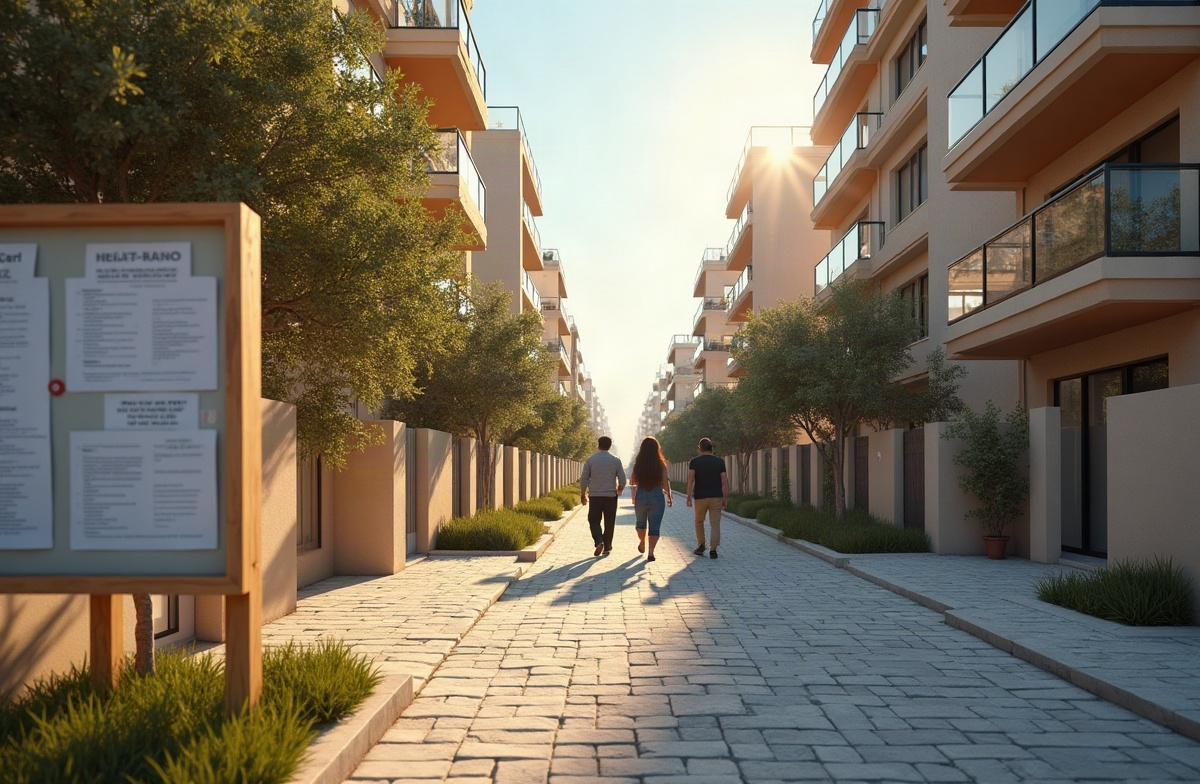
Life in Harish: A City of the Future or a “Religious Ghetto”?
Harish is one of Israel’s youngest and most discussed cities. Some call it a city of the future, combining modern infrastructure, affordable housing, and thoughtful urban planning. Others call it a “religious ghetto,” accusing the municipality of being overly oriented toward an ultra-Orthodox lifestyle. For new immigrants planning to move or buy an apartment, it is important to understand the real situation rather than rely on stereotypes. In this article, we will examine different sides of life in Harish: housing, work, education, transportation, and the social atmosphere. And if you want to quickly publish a listing for selling an apartment or finding a job, the platform will automatically translate it into English, Russian, Arabic, and Hebrew — this is especially convenient in a multilingual Jewish environment.
What Harish Is Like Today
Harish is located in the northern part of Israel, not far from the Harish junction and the railway station, which makes it attractive for those who work in Haifa, Tel Aviv, or Petah Tikva. The city was founded in 2012 and was initially conceived as secular, but over time a significant part of the population came to consist of religious and ultra-Orthodox families. Today the number of residents exceeds 60 thousand people, and the city continues to grow actively.
Harish’s infrastructure is developing rapidly: shopping centers, sports complexes, and medical institutions are opening. However, not all neighborhoods are provided with schools and kindergartens of the needed orientation. For secular families, this sometimes creates difficulties, since most educational institutions are oriented toward religious programs. Nevertheless, the city offers modern housing at prices lower than in the center of the country, which attracts young couples and new immigrants.
Religious Character and Everyday Life
One of the main debates around Harish is its religious character. Critics argue that the city is turning into a closed community where it is difficult for secular people to integrate. Indeed, in some neighborhoods stores and public transportation do not operate on Saturdays, and cultural events are oriented toward a religious audience. However, this does not mean that secular residents are completely deprived of comfort. Many neighborhoods retain a mixed character, and the municipality tries to take the interests of different groups into account.
It is important to understand that Harish is not a monolithic “ghetto.” It is rather a city of contrasts, where different ways of life coexist. For new immigrants from the countries of the former USSR who are accustomed to a secular way of life, it is important to study a specific neighborhood and its infrastructure in advance. For example, when searching for an apartment, it is worth paying attention to proximity to secular schools, shopping centers, and transportation hubs. You can find suitable housing options in the Real Estate section, where listings are automatically translated into four languages.
Housing, Work, and Transportation: A Practical View
Housing prices in Harish remain among the most affordable in the central region. Here you can buy a spacious apartment or house at a price that would seem unreal in Tel Aviv. However, when choosing, it is worth considering transportation accessibility: buses reach the railway station, but during rush hour they are overcrowded. For those who work in Haifa or Tel Aviv, this can become a daily ordeal.
Work in Harish itself is mainly concentrated in the service sector, education, and retail. Many residents travel to other cities every day. If you are looking for vacancies with a flexible schedule or remote work, it is worth browsing the Jobs section — offers from local and national companies are published there. For car owners, the city is convenient: there are parking lots, gas stations, and repair shops. If you want to sell or buy a car, take a look at the Auto section, where there are thousands of listings in Russian, English, Arabic, and Hebrew.
Education, Culture, and Social Environment
The education system in Harish consists mainly of religious schools and kindergartens. For secular families, this can become a problem, since there are few alternative institutions. Some parents take their children to neighboring cities. Nevertheless, several secular kindergartens and schools operate in the city, and the municipality plans to expand the network. Cultural life is also oriented toward religious traditions: concerts, lectures, and holidays often take place in synagogues and community centers.
For secular new immigrants, it is important to find their own community. In Harish there are Russian-speaking clubs, sports groups, and activity circles for children. The social environment is gradually becoming more diverse, although full tolerance is still far off. If you want to offer tutoring services, repair services, or event organizing, post a listing in the Services section. Thanks to automatic translation, your offer will be seen by residents who speak different languages.
Prospects and Conclusions for Future Residents
Harish is not simply a “city of the future” or a “religious ghetto.” It is a dynamically developing locality with its own pros and cons. Affordable housing, modern infrastructure, and proximity to major cities make it attractive for young families and new immigrants. However, the religious way of life and the limited choice of secular schools may become an obstacle for some. The decision to move should be based on personal priorities: are you ready to make compromises for the sake of saving on housing and a quiet pace of life?
If you already live in Harish or are planning to move, use the opportunities of the local classifieds platform. By posting listings in the Second Hand or Real Estate sections, you instantly gain access to an audience in English, Russian, Arabic, and Hebrew. This saves time and expands the circle of potential buyers, renters, or employers. Harish is a city of contrasts, and only you can decide whether you will become part of its future or remain on the sidelines.