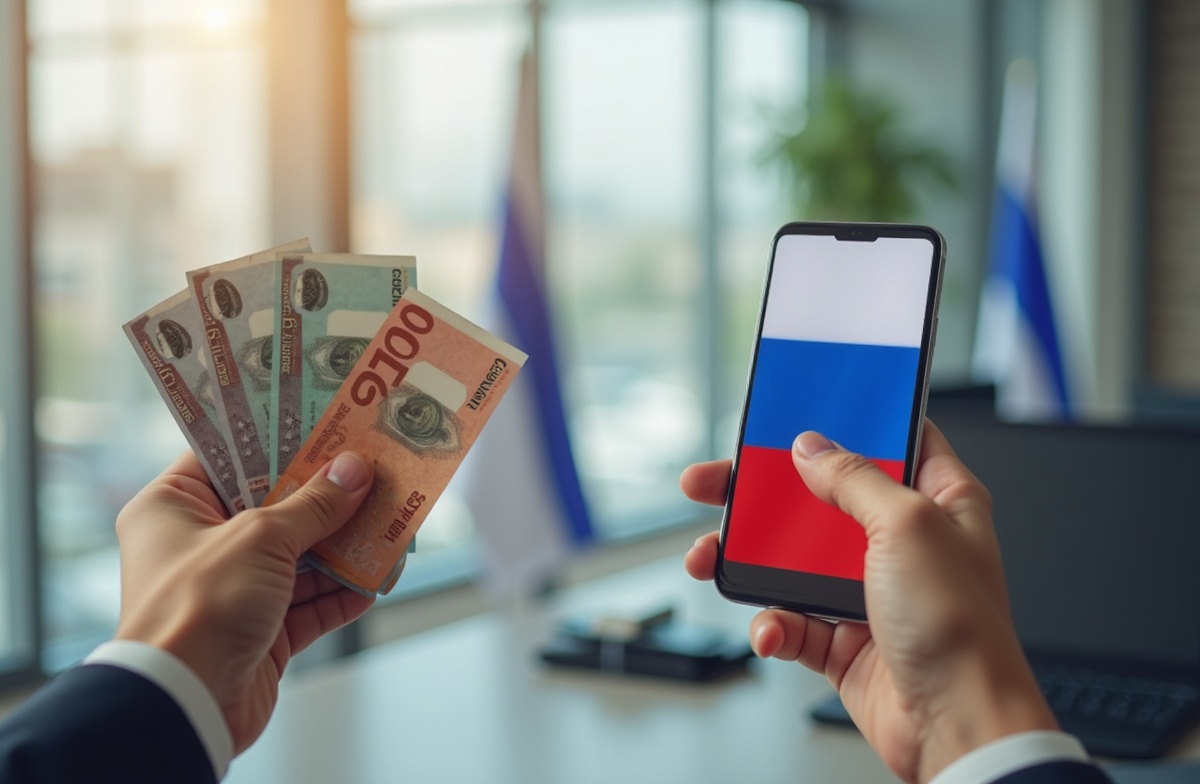
How to Transfer Money from Russia/Belarus to Israel in 2025: Current Methods
Transferring money from Russia or Belarus to Israel remains one of the most sought-after tasks for thousands of repatriates and labor migrants. In 2025, financial flows between these countries have undergone serious changes due to new restrictions and sanctions policies. Many familiar methods, such as direct SWIFT transfers or payments through international systems, have become unavailable or significantly more expensive. However, the market does not stand still: alternative services, cryptocurrency gateways, and payment aggregators are emerging to help solve this problem. Understanding the current routes is vital for anyone planning a move, buying property, or helping family. And to make the adaptation process in Israel even easier, we remind you that on our website 4israel.co.il, every ad is automatically translated into the four main languages of the country: Russian, English, Arabic, and Hebrew — this removes the language barrier and opens access to the audience of all communities.
SWIFT and Direct Bank Transfers: What Has Changed
Classic bank transfers via SWIFT from Russia and Belarus to Israeli banks in 2025 have become more complicated. Most major Israeli banks, including “Leumi,” “Hapoalim,” and “Discount,” apply enhanced compliance to incoming transfers from sanctioned countries. The processing time for payments can reach 3–5 business days, and fees have risen to 2–4% of the amount plus a fixed processing fee (usually 15–30 USD). In addition, banks often request documents confirming the origin of funds. The only advantage is high reliability. However, it is worth noting that transfer limits from Russia in 2025 are still restricted (about 1 million rubles per month for individuals through authorized banks). For Belarusian senders, the conditions are slightly milder, but Israeli banks still exercise caution. This method is suitable for large amounts (from 10,000 USD), where formal transparency is important, but not for urgent or small payments.
Cryptocurrency P2P Exchangers and Stablecoins: Speed Without Borders
One of the most popular solutions in 2025 has become Peer-to-Peer (P2P) platforms working with stablecoins (USDT, USDC). The scheme is simple: you buy cryptocurrency in Russia or Belarus with rubles/Belarusian rubles from trusted sellers on an exchange (e.g., Bybit or OKX), then sell USDT to an Israeli bank card or through a local crypto exchanger. The advantages are obvious — the transfer takes from 5 to 30 minutes, and the fee rarely exceeds 1.5%. In Israel, dozens of local channels operate that accept USDT and give out shekels (ILS) in cash or to an Israeli bank card. It is important to choose platforms with a high rating and seller verification, as fraudulent schemes still occur. Despite the Bank of Israel officially regulating crypto exchanges, such operations remain a legal method for individuals, provided that the capital gains tax (25% on profit) is paid. This route is ideal for transfers up to 5000 USD: it’s cheap, transparent, and doesn’t require visiting a bank.
Electronic Money Transfers and Neobanks: Alternative to the Classics
Specialized electronic transfer services such as PaySend, Wise (formerly TransferWise), or Revolut remain available, but with serious country restrictions. In 2025, Wise does not support operations with rubles from Russia directly, but you can use a euro or dollar account opened in a bank in Kazakhstan, Armenia, or Georgia. Once funds arrive in such an account, they can be easily sent to Israel with a fee of about 0.5–1%. Revolut allows Israeli residents to open a multi-currency account and receive transfers from CIS countries if the sender has a foreign currency account (EUR or USD). For residents of Belarus, the AIS “Raschet” system partially works: through ERIP you can pay for services of Israeli companies, but it is not suitable for transferring to an individual. The simplest option for small amounts is to use crypto cards (e.g., from Crypto.com) or virtual cards from payment systems issued in friendly countries. It is important to remember: any transfers over 50,000 shekels (about 13,500 USD) automatically fall under the control of the Israel Money Laundering Prevention Authority — it is better to split payments.
How to Find a Job in Israel to Avoid Depending on Transfers
The most reliable way to solve the money issue is to start earning locally. The Israeli labor market in 2025 is extremely diverse: specialists in high-tech, construction, medicine, and services are in demand. Many repatriates successfully find work from home or in a hybrid format. On our website in the Jobs section, you will find thousands of current vacancies from direct employers in Russian, and thanks to automatic translation of ads — also in English, Arabic, and Hebrew. This means that both job seekers and employers speak the same language. If you have already received a transfer and are planning to buy a home, be sure to check out the Real Estate section — it offers listings for sale and rent of apartments throughout Israel. For those who want to sell personal items or find temporary earnings, the Classifieds section has been created. And if you need the services of a realtor, lawyer, or accountant — the Services section will help you find verified professionals.
Practical Tips for Minimizing Losses and Choosing a Route
To transfer money from Russia or Belarus to Israel in 2025 with minimal losses, follow three rules. First: do not use one channel for all amounts. For transfers up to 1000 USD, P2P crypto exchangers are optimal (fee up to 1%). For amounts from 1000 to 10,000 USD — a combination of “cryptocurrency + Israeli exchanger” or a euro account through Revolut. If it’s about larger amounts (from 10,000 USD) — use SWIFT with a full package of documents, this will reduce the risk of blocking. Second: always check the conversion rate. The difference between the Bank of Israel rate and exchanger rates can reach 3–5%. Use aggregators like MyChange or BestChange for monitoring. Third: keep all receipts, statements, and screenshots of transactions — the Israel Tax Authority in 2025 actively checks large incoming transfers. And last but not least: post ads on our website for selling a car, for example, in the Cars section — this will help you quickly get cash shekels without transfer fees. Let’s repeat the key idea: on 4israel.co.il, each of your ads becomes available in four languages, which significantly increases the number of responses and speeds up transactions.